
Productionizing Machine Learning Models
Welcome to this series of blog posts where we'll walk you through how we get machine learning models from the drawing board to real-world…

Welcome to this series of blog posts where we'll walk you through how we get machine learning models from the drawing board to real-world use. We want to shed some light on the tricky path to making these models ready for everyday applications, share some helpful tips, and tell you about our experiences at Anybrain. This first post starts our dive into the significant challenges of making machine learning models work outside the lab.
Machine Learning System vs Traditional Software System
The distinction between machine learning (ML) systems and traditional software systems marks a pivotal shift in the landscape of modern digital infrastructure. These two paradigms diverge significantly in their development, operation, and maintenance approach, each presenting unique challenges and productization opportunities.
Traditional software systems rely on explicit programming, with developers crafting code to dictate every decision and action the software will take. This rule-based construction contrasts with ML systems, which are engineered to learn from data patterns and make decisions autonomously. The creation of ML systems involves training models on datasets to perform tasks, eliminating the need for explicit programming for each potential outcome.
A notable difference lies in their dependency on data. ML systems are inherently linked to the quality, quantity, and relevance of their training data, a dependency that introduces significant complexities in ensuring data integrity. These systems stand in contrast to traditional software, where data dependency is less concerned.
Predictability also sets these systems apart. Traditional software is known for its predictability, with consistent outputs for given inputs. ML systems, however, navigate the realm of unpredictability due to their reliance on probabilistic algorithms and the variable quality of training data. This unpredictability needs a distinct approach to testing and validation, focusing on the system's performance and ability to apply learned insights to real-world scenarios.
Traditional software typically sees code modifications or enhancements regarding maintenance and updates. ML systems, however, often require retraining with new data to stay current, in addition to regular code updates. This process is vital to adapt to evolving data patterns and ensure continued accuracy over time.
The testing and validation phase further underscores the fundamental differences between these systems. While traditional software testing centers on verifying code correctness and functionality, ML systems demand validation of their performance and generalization capabilities, often requiring complex datasets for thorough testing.
The dynamic nature of data and the necessity for continuous monitoring and updating in ML systems introduce a unique set of challenges. Machine Learning Operations (MLOps) plays a crucial role here. MLOps provides the methodologies and practices needed to streamline the deployment, monitoring, and maintenance of ML systems in production environments.
Machine Learning Systems Process
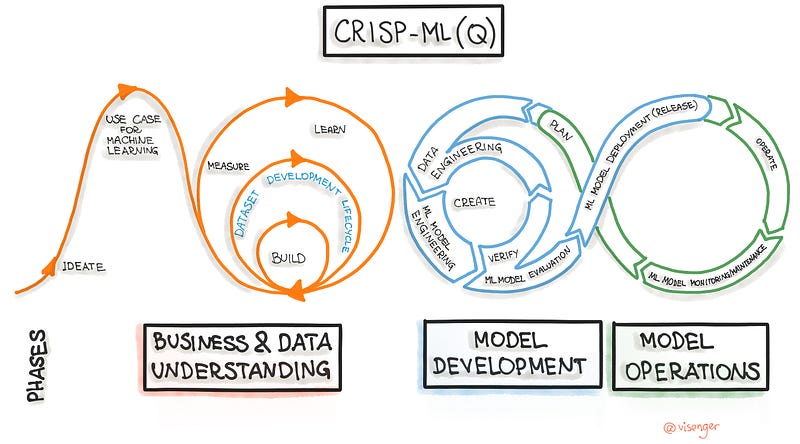
Creating and deploying machine learning (ML) models involves a detailed, iterative process with several critical stages extending well beyond initial development.
Business & Data Understanding
The journey begins with data collection and preparation, laying the groundwork with a thorough dataset that's subsequently cleaned and preprocessed to enhance model robustness. Feature engineering follows a crucial step to improve the model's predictive capabilities and interpretability.
Model Development
Next, model selection and training take place. This phase involves experimentation with various algorithms and settings to optimize performance, leading to model evaluation, where the trained model is tested against unseen data to assess its accuracy and generalizability.
Based on these insights, hyperparameter tuning and optimization refine the model further. When the model's performance is deemed satisfactory, it progresses to deployment in a production environment, which can vary based on the application's specific needs.
Model Operations
However, deployment isn't the final step. Monitoring and maintenance are ongoing requirements to ensure the model remains effective over time and addresses emerging issues such as data drift. Lastly, the feedback loop represents the cyclical nature of the ML workflow, where real-world performance feedback informs continuous improvements and adaptations.
This holistic approach, from data preparation to continuous monitoring and feedback, highlights the dynamic and iterative nature of ML model development and deployment.
Challenges in Productionizing Machine Learning Models
Moving machine learning (ML) models from the experimental phase to commercial use involve technical hurdles throughout development. These include challenges related to data handling, the structure of the model, its ability to scale, performance metrics, and seamless integration into existing operations. Addressing these issues is crucial for the launch and ongoing support of ML-driven products within actual market environments.
The foundation of any effective ML model lies in the quality and impartiality of its training data. Establishing robust data management systems that automate the processes of data collection, cleansing, and preparation, coupled with data enrichment and systematic quality assessments, is vital for preserving the integrity and applicability of data.
Implementing strategies such as cross-validation, regularization, and versatile model frameworks is important to ensure that models can accurately predict outcomes on new, unseen data. Additionally, leveraging transfer learning and adapting models to new domains can significantly enhance their versatility across various scenarios.
Meeting the demands of escalating data volumes and computational needs necessitates refined model designs, which can be achieved using cloud-based and distributed computing resources. Implementing strategies for balancing loads and dynamically scaling resources is key to maintaining consistent performance.
Updating models in response to changing data landscapes and user requirements while efficiently managing their versions requires a solid MLops strategy. This strategy should automate model training, deployment, and oversight aspects, employing continuous integration and delivery practices for seamless updates and management of models and their data.
Ensuring model fairness and reducing bias call for models designed with fairness in mind, thorough bias evaluations, and the application of interpretability mechanisms. Cultivating a diverse team for model development can also aid in identifying and counteracting potential biases.
Improving the transparency and accountability of ML models, particularly those with complex structures, involves integrating interpretability frameworks and approaches, such as feature significance analysis and the application of explainable AI (XAI) techniques. This is essential for building end-users' trust by making model decisions more transparent.
The effective integration of ML models into preexisting infrastructures necessitates careful consideration of compatibility issues, response times, and anomaly management. This can be achieved by adopting a microservices architecture, using APIs, and incorporating human oversight for enhanced dependability.
Navigating the technical complexities of making ML models market-ready demands a comprehensive strategy merging advanced engineering solutions with a deep understanding of their practical application contexts.
Overcoming Challenges in Productionizing Machine Learning Models with MLOps
As we saw, bringing machine learning (ML) models from development to production is challenging—these range from ensuring model reliability and scalability to maintaining performance over time. As businesses increasingly rely on ML to drive decision-making and automate processes, the stakes for successfully productizing these models have never been higher.
The production of ML models involves more than algorithm selection and training. It requires a holistic approach to ensure that models are not only accurate but also robust, scalable, and seamlessly integrated into existing systems.
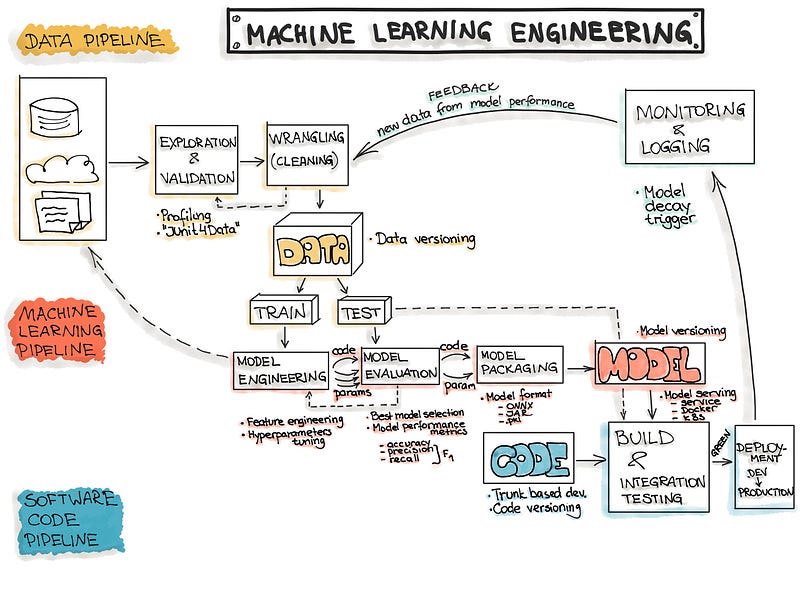
MLOps, a compound of "machine learning" and "operations," combines the best practices from machine learning and software development. It aims to automate and streamline the end-to-end machine learning lifecycle, facilitating the deployment, monitoring, and maintenance of ML models in production environments.
Transitioning ML models from development to production can be daunting. However, the adoption of MLOps practices offers a structured and efficient pathway through this maze. By automating critical aspects of the ML lifecycle, MLOps mitigates the challenges and enhances the overall value and impact of machine learning initiatives. This can be achieved by providing tools for better monitoring and maintenance and ensuring that models remain compliant and scalable.
As organizations continue to navigate the evolving landscape of ML technologies, the principles and practices of MLOps will play a crucial role in transforming innovative models into tangible business solutions. Embracing MLOps is not merely a strategic choice but a necessity for those looking to leverage the full potential of machine learning in their operations.
In the following article of this series, we will cover the various Model Deployment Strategies, highlighting their advantages and challenges, and explore how some MLOps techniques can help us overcome these challenges.