
How and why “boosting” affects the gaming industry?
Especially in these trying times, gaming is more than ever part of our lives. Some may connect just to blow off some steam with friends…

Especially in these trying times, gaming is more than ever part of our lives. Some may connect just to blow off some steam with friends, while others play to keep some kind of edge as most outdoor activities are forbidden, either way, gaming will always bring out that competitive side that is in all of us. We all play to have fun, get better, master our skills, and ultimately, win. Most of us will go down that path the hard way — the legitimate way — but others will always be tempted to cut corners by using any means at their disposal.
Aimbots, wallhacks, rapid-fire, hundreds of different types of cheats will give the most toxic members of our community the tools to ruin our gaming experience. While these frauds, or hacks, are possible to eradicate, there has always been one that has eluded the game developers, deemed impossible to detect: Boosting.
What is boosting?
Boosting has had many meanings over the years, but by its most recent definition, it is the act of tampering with one’s ranking in a game in order to access better rewards, status, or titles. You may think that it is done by hacking some games, tampering with some files. But the way to boost yourself is actually very simple, and thus, very difficult to avoid for game developers: a more skilled player will take possession of your account and rise through the ranks for you, and for money.
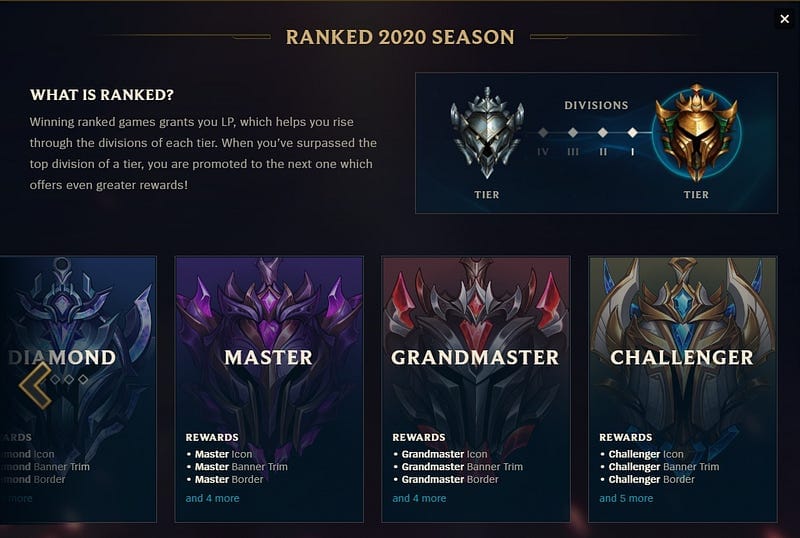
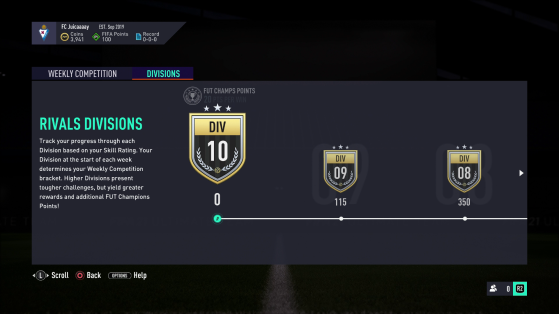
Apex Legends, Fifa, League Of Legends… the most popular titles have some sort of ranking system, and the better your rank is, the better rewards you’ll get, or status, or cosmetics, etc. In some games, it can even give you -with equipment or bonuses- an edge on others. Being “Bronze” or “Master” in League of Legends is a way of knowing your place in the whole ranked player base. A team of “bronze” players won’t stand a chance against a team of higher rank players, and that system is, in part, actually in place to prevent that. While playing, or browsing social media, you’ll regularly see players boast about their LoL rank, their division in Fifa Division Rivals, or their rank in Fifa FUT Champions. It’s a status that, obviously, many players want when they start to get serious with their game.
It may take you months, years, countless efforts and sweat, to reach that spot at the top that you crave so much, but for more skilled players, like pros or soon-to-be pros, it will only take a few days. And naturally, a business came from all of this.
By doing a simple research on your favorite search engine, you’ll find dozens of websites that provide boosting services.
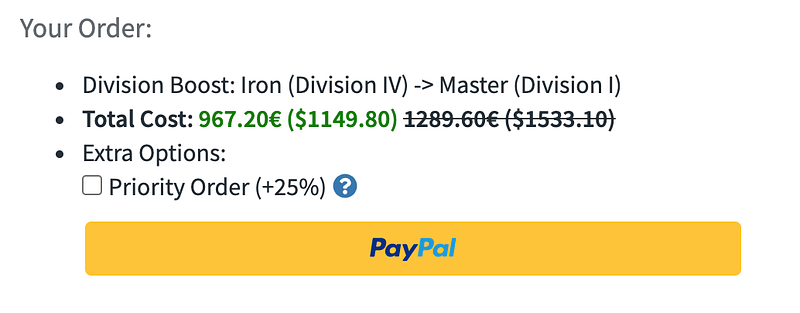
For example, it will cost you around 1000$ to get from the bottom to the top of the ranking system in League Of Legends. For a quick and easy bump in your Fifa Division, that’ll be around 30$, way more if you are aiming for a top rank in FUT Champions.
The first boosting websites date as far as World Of Warcraft, became even more popular with the rise to fame of League Of Legends, to nowadays be a very lucrative business for many in the gaming industry… except the studios and developers.
And how could it not be? For the boosters, it is a great way to earn extra cash while studying or working, a few hundred euros a month just by playing your favorite game. For those who struggle to break-out as a top-tier player or streamer, it’s a steady revenue line, actually even more lucrative and efficient than winning lower stage tournaments — as covered in the excellent article by Dom Sacco, for esports-news.co.uk.
For the boosted, or boostee as Riot calls them, a quick and easy (and costly) way to the top.
When it all started, you’d usually pay for the services of top-ranked, and therefore professional players, to boost your account. But as the demand increased, the market saturated and the pros, fearing for the negative impact on their reputation, left those services one by one. Nowadays, some still do it but usually under complete anonymity, and the spot is now filled with highly skilled amateur players that can still provide the same service, but not without risk.
If you look closely at EA Sports Fifa rules, you’ll find that cheating is not permitted, of course, and it includes “selling match collusion, matchmaking manipulation, or win manipulation services”. Breaking those rules could force EA to do the following:
- Remove your account from FUT Champions leaderboards
- Remove your FUT Champions rewards
- Remove your FUT Coins
- Delete your FUT Club
- Temporarily or permanently ban your account from FIFA online play, which means you lose access to every mode where you connect to our servers. Examples of FIFA online play are (but not limited to) FIFA Pro Clubs, FUT Squad Battles, or VOLTA FOOTBALL.
- Ban your account from your current FIFA game
- Ban your account from all FIFA games
- Ban you from all EA games
- Suspend your console from playing FIFA online modes for a period of time
- Restrict your access or in-game privileges in other ways.
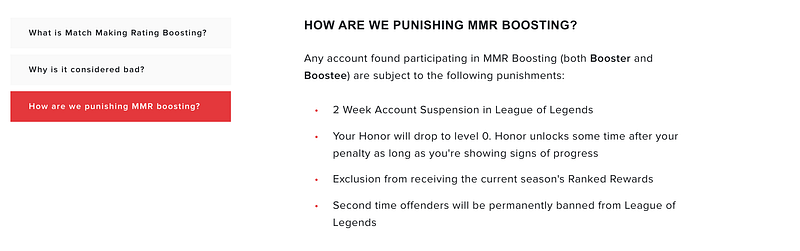
The same goes for Riot Games and their main title League Of Legends, with a webpage that covers specifically this matter: For both the booster and boostee, 2 weeks account suspension on the first strike, and permanent ban on the second strike are within the possible punishments when you are caught red-handed.
How does boosting affect gaming?
This practice, condemned by studios who do their best to detect and punish the boosters, poses other threats, mainly to the rest of the industry:
- Well, first and foremost, it’s not fair. It devalues the hard work of all those who acquired their status the legitimate way
- It also leads to servers full of players who are either too good for the level they’re playing on (the boosters), or not good enough to perform well against their opponent in higher brackets (the boosted). A serious impact on gameplay and leaderboards while the developers are working so hard to create balanced servers for a better gaming experience
- In some cases, this can affect the in-game economy, with players wrongfully given access to items or virtual coins/money. A noticeable shortfall for the studios looking to reinvent the way they monetize their games
- Finally, it creates obvious security breaches with players sharing their logins to third parties
Then why is it still happening? As it affects everyone in the industry, from players to developers, it’s a legitimate question to ask. And the answer is simple: this is very challenging, some say impossible, to detect.
When the developers first noticed this practice, they developed internal tools to counter boosting. They would monitor logins — time and localization — and look for anomalies. For example, a European player would instantly connect from South-East Asia while boosting, making the decision to punish easy and immediate. Those services now advertise the use of VPNs, making it impossible for developers to detect anomalies.

When studios looked for anomalies in the player's stats — it is indeed very difficult for a player to explain why losing streaks suddenly turned into consistent winning streaks — the boosters started to deliberately throw games once in a while, to avoid detection.
Boosters would also use cheat programs — hacks — to boost more efficiently, always one step ahead of the studios as the cheat/anti-cheat cycle dictates it.
How do we solve this?
Boosting affects players, who find themselves on unbalanced servers, against opponents here to “stomp noobs” while the ones who worked tirelessly to get to the higher levels struggle to advance as they are regularly teamed-up with players that shouldn’t even be there. It affects the studios, and developers, who always seem to be one step behind, lacking the right tools to fight boosting. But it also affects those who pay for that kind of services, as they can’t keep up with their unfairly gained status, but also can’t really improve their gameplay in the process.
As for the tools, we at Anybrain believe that the focus should be on player behavior. As we are all unique, so is our play-style. By analyzing the multiple ways a player interacts with the game — we call them behavioral biometrics — our anti-fraud technology can detect instantly any profile anomaly, making it “a breeze” to avoid boosting for any game, any platform.
As for the boosted, why not try coaching, and/or power-leveling with friends and good in-game Samaritans? A healthier way of getting there without breaking the rules. They won’t even have to go that far, as those same boosting services now provide coaching sessions with seasoned players. Maybe they too, feel the tide starting to turn?
To learn more about our company and connect with our team, you can leave your contact information on this page or join our discord
Sources:
- https://support-leagueoflegends.riotgames.com/hc/en-us/articles/201751834-MMR-Elo-Boosting
- https://help.ea.com/en/help/fifa/fifa-rules/
- https://esports-news.co.uk/2017/07/12/elo-boosting-how-much-boosters-make/
- https://euw.leagueoflegends.com/en-gb/news/game-updates/ranked-rewards-2020/
- https://www.millenium.gg/news/20487.html