
Bots in videogames: the future of hacking?
As you know there are multiple types of fraud in video games, and we already covered some in previous posts such as aimbot and…

As you know there are multiple types of fraud in video games, and we already covered some in previous posts such as aimbot and smurfing/boosting. Now, I’ll cover the bots and how they can impact the game experience for legit players.
Very shortly, a bot is a software that can play a game in place of a human, trying to recreate human decisions and interactions.
As gamers, we are used to interacting with bots online. For example chatbots, discord bots and crawlers. These bots are used to help us with different tasks, but not all of them have our best interests in mind. Some are used by bad actors to steal your data — for example, there’s malware, called spidey bot, disguising itself as a discord bot to steal your username, email address, IP address, phone number and possibly your password.
In video games, we also have bots that can help us without harming other players, but normally, these are already implemented in the game to help us learn the basic mechanics, to help us perform some tasks, or, to improve machine learning algorithms to evolve the technology. A good example is the OpenAI Bot for Dota2 (we will dive into that later on).
The overload of bots can lead to players leaving the game or choosing another game, by feeling an unfair and unrewarded experience.
Bots also can lead to a parallel economy: players trade their accounts or sell in-game items for real money, by using bots to help them grow their accounts.
Bots can have different behaviours in different types of games, I’ll describe how they behave in the most common types.
MMORPG
MMORPG’s are very time-consuming games, where players need to do tasks and farming to collect in-game resources(items and gold) and gain experience.
With bots, players can decrease the amount of time they spend in-game doing hard tasks and accelerate their progression, becoming stronger and richer than other players with no effort, as bots allow players to play the game for hours without actually playing. This is completely unfair to other (honest) players.
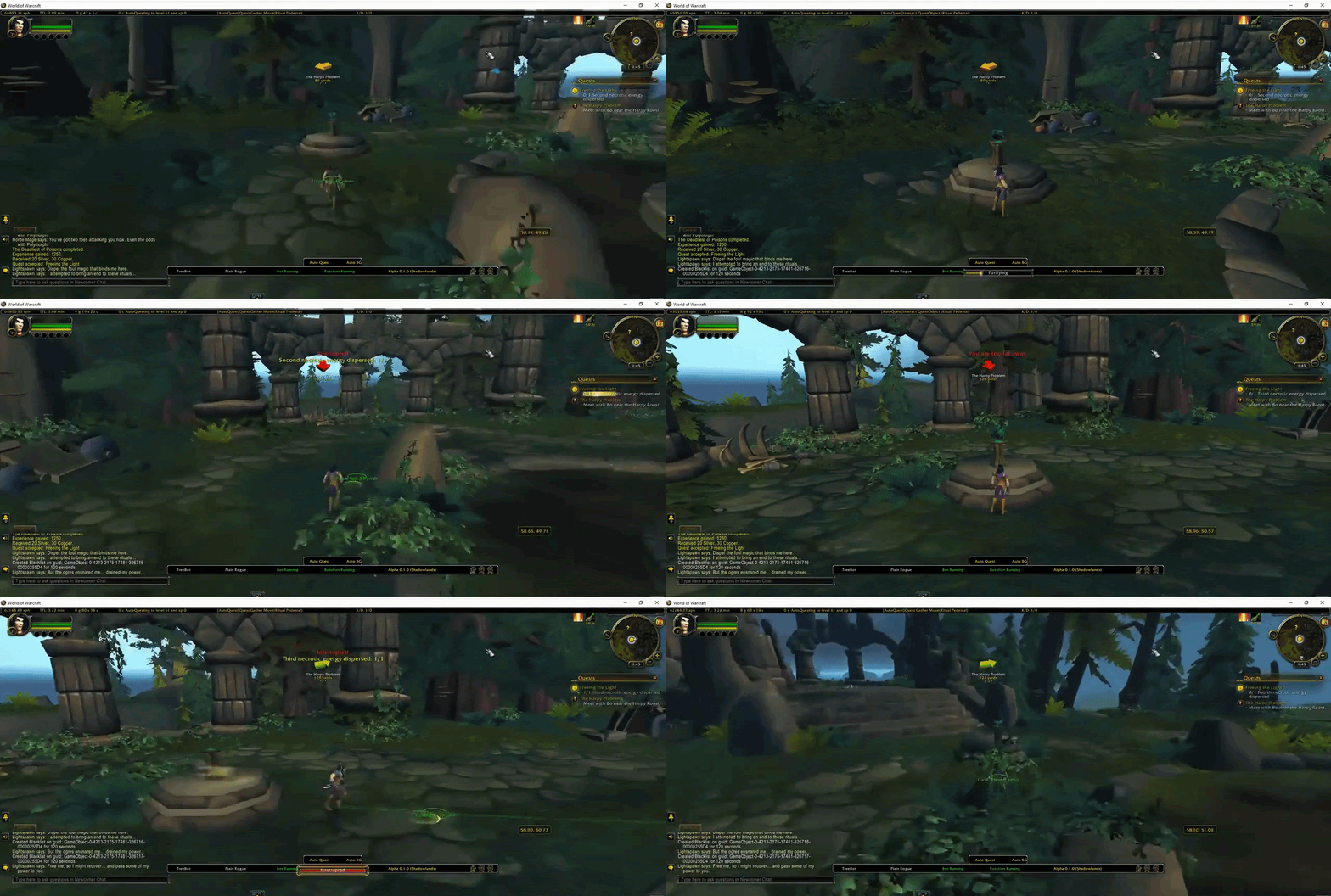
Besides the unfairness of using bots for other players, they can have more impact and completely ruin a game experience for all players, these types of games have their own economy and market. Just like in the real world, it’s possible to sell and buy resources, meaning that bots can mess with the game economy and make it harder for players to evolve, we can view a preview of the bot in action in the next gif.
MOBA
Bots are also used to play against other players to win a match and level up the account rank. An advanced bot can have a better performance than a player, the reaction time is faster, can have access to in-game information, can process that information faster and can calculate every distance from every object which is crucial for the correct use of abilities and spells. All this information takes more time for a player to process and evaluate the best use case.
The OpenAI team created a sophisticated AI bot for the game Dota2 where the bot already defeated an esports champion team. It is important to note that for this bot to run, it’s necessary to have a lot of computer power and resources, which a normal person wouldn’t have. Nevertheless, it’s possible to create bots that help players or play for them.
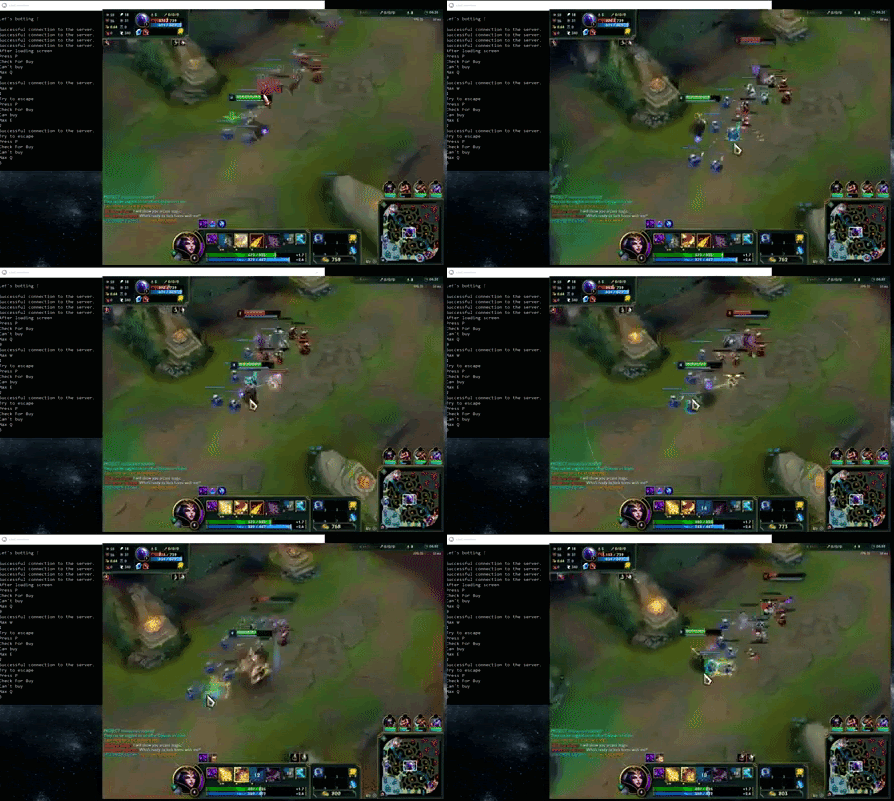
In the game League of Legends, bots are associated with an illegal market outside the game, players use bots to level up new accounts to level 30 and sell them online in marketplaces like eBay, we can view a preview of the bot in action in the next gif.
FPS
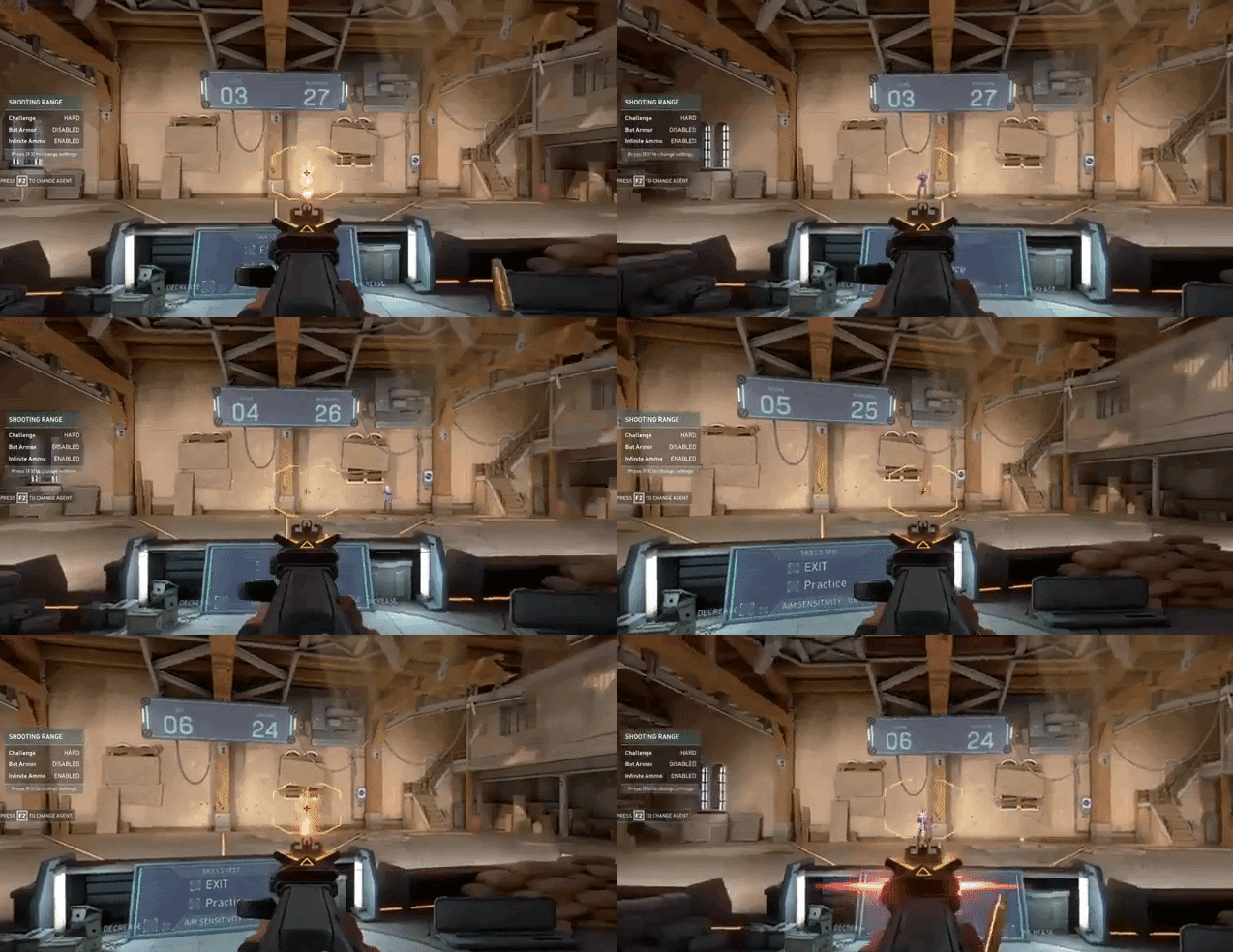
In FPS titles, bots can be a replacement for aimbot or triggerbot. The most common type of bot is a pixel bot. A pixel bot relies on detecting pixels on the screen and moving the mouse to the desired position. Well-implemented, it can be as good as an aimbot/triggerbot, we can view a preview of the bot in action in the next gif.
It’s also possible to use advanced AI bots: they try to mimic human behaviours. However, this is very hard to perform and not really reliable.
Note that bots can be used in every type of game, they’re versatile, depending only on what a bad actor wants to do. Lately, we observed that bots can also be used on platforms that don’t reward performance only, but also presence. As players can earn money simply by participating in matches and challenges, this opens the door to the use of bots able to bypass existing rules and anti-cheats in order to make it seem like the player is constantly playing, and therefore constantly gaining rewards.
Currently, most cheats interact with the game process — which contains all the information about the game state (players location, weapons, health, etc) — and they work by accessing this information. Bots aren’t required to interact with the game process, most of them use computer vision algorithms to perform their tasks.
With the evolution of games to the cloud, we believe that bots will take over the current implementation of cheats since it isn’t possible to access the game process on the cloud and because of that, they’re harder — for traditional anti-cheats — to detect.
At Anybrain, we are working hard to improve our models to detect simple and advanced bots and we are confident that our solution is the key to mitigating bots.